Midway Rising: San Diego Should Stop Before It Gives Away an Irreplaceable Public Asset
San Diego needs housing. It needs affordable housing. And it needs a modern sports arena.
But those needs do not make every project in every location a good idea.
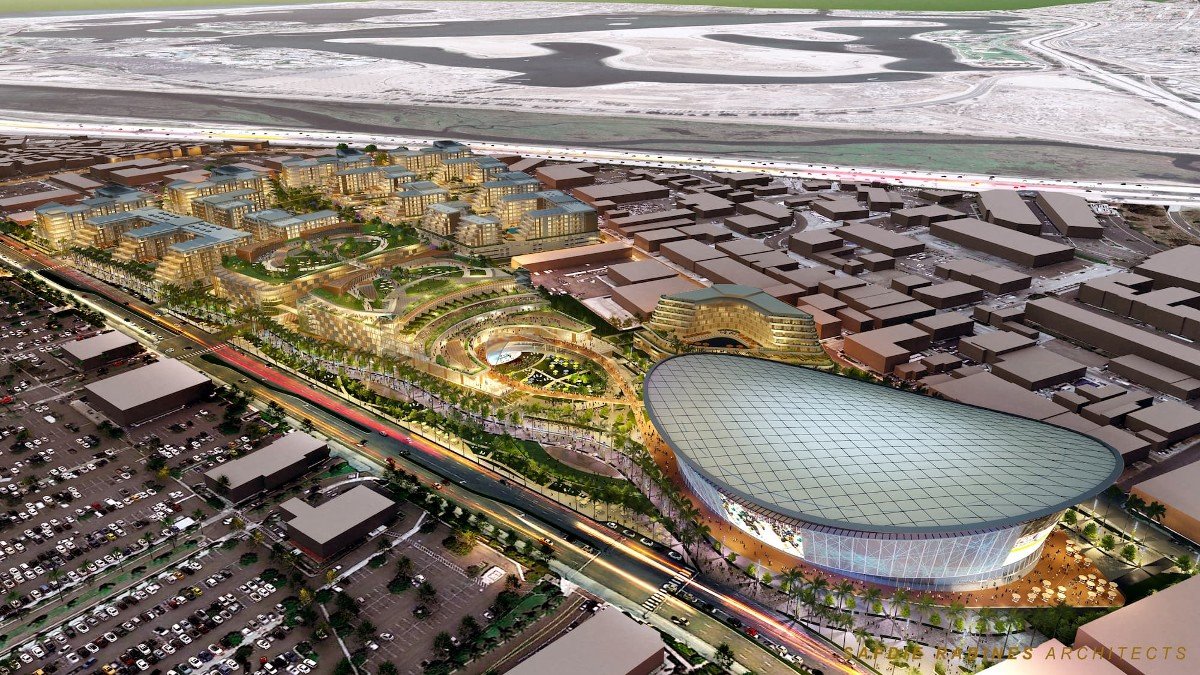
Midway Rising proposes to place approximately 4,250 homes—including 2,000 income-restricted units—a 16,000-seat arena, commercial development and other uses on approximately 49 acres of publicly owned land at the existing Sports Arena site.
Before San Diego commits this extraordinary public asset to private development for generations, taxpayers deserve answers to some very basic questions.
Public Land Is Forever
Start with the land.
San Diego owns nearly 49 acres in the Midway District. In a city where acquiring large parcels for parks and public recreation has become prohibitively expensive, this land is extraordinary.
Once we cover it with thousands of apartments, commercial buildings and an arena under a generations-long ground lease, we will almost certainly never get that opportunity back.
Buildings can be built elsewhere. Housing can be built elsewhere. An arena can be built elsewhere.
We cannot manufacture another 49-acre public property.
San Diego's population will continue to grow. Every additional resident increases demand for parks, recreation, playing fields and open space. Yet we are considering committing one of the City's largest centrally located public properties to an extremely dense private development.
Future generations may wonder why we were so eager to give up an asset they could never replace.
Then There Is Traffic
Midway is already one of San Diego's most difficult transportation areas.
Sports Arena Boulevard, Rosecrans Street and Camino del Rio West feed traffic toward Point Loma, Ocean Beach, Mission Bay, Old Town, Interstate 5 and Interstate 8.
Now imagine adding more than 4,000 households, retail and commercial activity, employees and thousands of people arriving for a 16,000-seat arena event.
This isn't merely a Midway problem.
It creates what might be called a regional Time Tax.
Every additional five or ten minutes imposed on thousands of commuters, workers, families and visitors is time taken from their lives. Unlike a conventional tax, nobody receives a bill for it. We pay it sitting behind a steering wheel.
Multiply those minutes by thousands of people, 365 days a year, for decades.
Congestion has a real economic and human cost.
Remarkably, the City's environmental responses state that parking and congestion themselves are not issues analyzed under CEQA.
They may not count under CEQA's current rules. They certainly count to San Diegans.
Pretending Cars Will Disappear Doesn't Make Them Disappear
Midway Rising is based partly on the increasingly fashionable assumption that if government approves less parking, people will own fewer automobiles.
But will residents of Midway Rising actually be prohibited from owning cars?
No.
There is no deed restriction saying, “You may live here only if you don't own an automobile.”
People will continue to own cars because San Diego is a geographically enormous region and automobiles remain necessary for millions of daily trips—to jobs, schools, medical appointments, children's activities, shopping, beaches, recreation and visits with family.
Failing to provide parking doesn't eliminate automobiles.
It eliminates places to put them.
The consequences then spill onto surrounding neighborhoods, businesses and public streets.
And an Arena Without Adequate Parking?
The same magical thinking is being applied to the arena.
Supporters point to the Old Town Transit Center as an alternative.
But look at a map.
The trolley does not stop at the Sports Arena.
Old Town Transit Center is roughly a half-mile or more from significant portions of the Midway site depending upon the route and destination. Arena patrons arriving by trolley would still need to walk, bike, take a bus or otherwise travel between Old Town and the arena. The City's environmental documents themselves describe Old Town as a place where passengers would transfer to another mode—including walking, biking or bus—to reach the project.
Now picture that trip at 10:30 or 11 p.m. after a concert.
Thousands of people—including families, teenagers, seniors and visitors unfamiliar with San Diego—would be expected to make their way through a heavily trafficked commercial district to reach Old Town.
Some certainly will.
But it is unrealistic to build a transportation plan around the assumption that enormous numbers of arena patrons will choose to do so.
There Is a Better Place for an Arena
San Diego already has another location that deserves serious consideration: the Mission Valley stadium area.
That area has something Midway does not: actual trolley service at the site.
It also contains major sports and entertainment uses whose parking demands occur at different times. Properly planned, parking could potentially be shared among facilities rather than duplicated.
That is genuine transit-oriented development.
Putting an arena a substantial walk from a trolley station and calling it transit-oriented development is something else.
What Are Taxpayers Getting for Their Land?
There is another extraordinary problem.
After years of negotiations, the City still has not presented the public with an executed long-term ground lease showing exactly what Midway Rising will pay taxpayers for this enormously valuable property.
The City selected Midway Rising in 2022. The exclusive negotiating agreement has since been extended through December 2026.
Before City Council commits this land, taxpayers should see—in plain English:
the independently appraised market value of the property;
the market ground rent that 49 acres should command;
the annual rent Midway Rising will actually pay;
all rent escalators and revenue-sharing provisions;
the value assigned to development obligations in exchange for reduced rent; and
the present value of any difference between market rent and contracted rent over the full lease.
Without that information, how can anyone know whether this is a good deal for San Diego?
A below-market lease of public land is a subsidy just as surely as writing a check.
Let's Call “Affordable Housing” What It Is
Midway Rising repeatedly advertises 2,000 “affordable” apartments.
But “affordable” housing does not become inexpensive to construct simply because government puts that word in front of it.
Someone pays the difference.
These are more accurately described as income-restricted, subsidized apartments.
The financing is expected to rely substantially on mechanisms such as federal Low-Income Housing Tax Credits and potentially other federal, state and local housing programs.
There is nothing inherently wrong with subsidizing housing for people who need help.
But taxpayers deserve honest terminology and honest accounting.
Before approving Midway Rising, San Diegans should know the estimated public subsidy per apartment—including tax credits, direct government financing, infrastructure assistance and any below-market value embedded in the ground lease.
If hundreds of thousands of dollars of public subsidy are required for each apartment, we should also ask an obvious question:
Could the same public resources help more families if used differently?
Calling housing “affordable” should never relieve government of its obligation to determine whether the subsidy is an efficient use of taxpayer resources.
Why Does This Project Need Special Treatment in Sacramento?
Perhaps the most troubling development has occurred far from Sports Arena Boulevard.
State lawmakers have now advanced project-specific legislation affecting Midway Rising's exposure to challenges under the California Environmental Quality Act.
Senate Bill 344 would deem the City's final subsequent environmental impact report sufficient, adequate and complete for CEQA compliance and allow project approvals to rely conclusively upon it.
Supporters say the environmental analysis has already been performed and that the legislation merely prevents years of litigation.
That argument deserves consideration.
But so does another question:
If Midway Rising is environmentally sound, why does this particular project need special legislation protecting it from the ordinary legal process available to challenge other major California developments?
The Legislature's late-session action is especially troubling because SB 344 reached this form through a “gut-and-amend” process rather than proceeding from the beginning as a Midway Rising bill through the normal legislative process.
A project involving 49 acres of public land and billions of dollars of development should withstand more public scrutiny, not less.
Stop. Answer the Questions. Then Decide.
Midway Rising's supporters present the project as an almost irresistible package: housing, affordable housing, a new arena, parks, jobs and redevelopment of an aging commercial district.
Those are attractive words.
But government has an obligation to look beyond the rendering.
San Diego is considering permanently transforming nearly 49 acres of public land.
Before doing so, we need an honest accounting of the land value, lease economics, housing subsidies, parking demand, arena parking, traffic impacts and the cumulative Time Tax imposed upon residents throughout the surrounding region.
We should also independently evaluate whether the arena belongs at Midway at all and whether Mission Valley offers a more logical transportation and parking solution.
Most importantly, we should ask a question that has become strangely uncommon in major development decisions:
What use of this publicly owned land will provide the greatest benefit to San Diegans—not merely next year, but 25, 50 and 100 years from now?
There is no urgency great enough to justify getting that answer wrong.
Once this public land is committed, San Diego may never get it back.