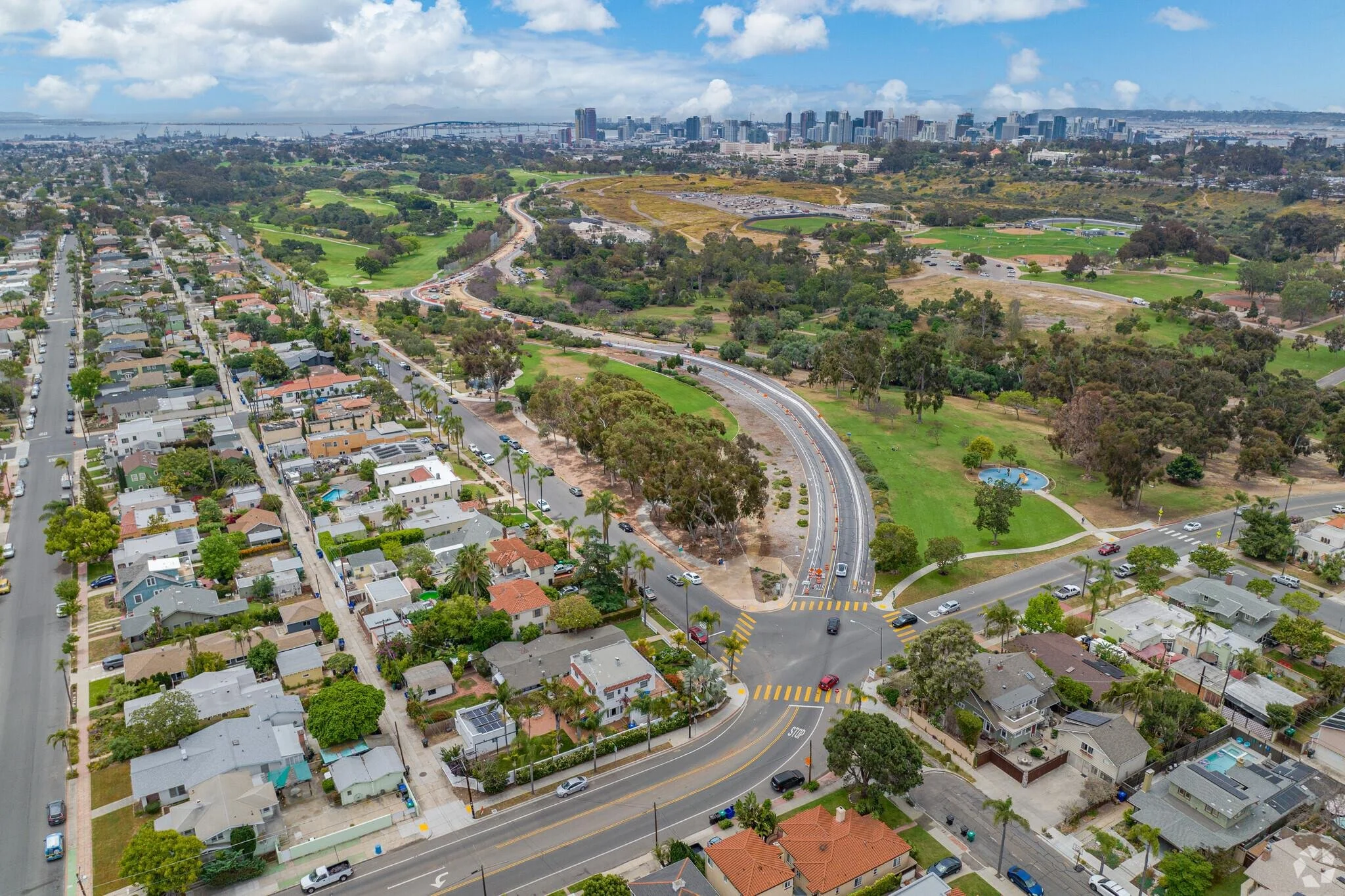
What Is Responsible Planning?
Responsible planning starts with a simple question:
Does this make our community a better place to live?
Good planning considers more than the number of housing units that can be built on a property or how many people can theoretically be moved from automobiles to bicycles or transit.
It considers how people actually live.
Where will people park? Can the streets accommodate additional traffic? Are there adequate parks? Can police and fire services support additional population? Does a building fit its surroundings? Are neighborhood businesses serving residents? Are public spaces safe and attractive?
These aren't anti-growth questions.
They are planning questions.
Our Approach: Environmental Design
Environmental design is the thoughtful planning of the places where people live, work, travel and gather.
It brings together architecture, land use, transportation, signage & graphics, landscaping, parks, public spaces, infrastructure and the natural environment with one overriding objective:
Improving people's quality of life.
A well-designed community should be functional, attractive, safe and pleasant.
People should have parks and open spaces. Streets should work. Neighborhood businesses should serve neighborhood residents. Landscaping should beautify communities. Development should fit its location. Transportation alternatives should provide genuine benefits.
Most importantly, planning should bring people together rather than make everyday life unnecessarily difficult.
Issues We Care About
Housing & Parking
Building housing without adequately considering the automobiles residents actually own transfers a private development's parking demand onto public streets.
Policy: Parking requirements should reflect real-world demand, neighborhood conditions, bedroom counts and demonstrated vehicle ownership.
Responsible ADU Development
ADUs can provide useful housing, but unlimited density on residential lots can negatively affect neighboring homes through inadequate setbacks, privacy impacts, parking and overdevelopment.
Policy: Support reasonable ADUs while establishing reasonable limits on number, size, height, setbacks and lot density.
Parks & Recreation
As San Diego increases residential density, parks and recreational facilities become more important—not less.
Policy: Population growth should be accompanied by corresponding investment in parks, playing fields, recreation and open space.
Development That Fits Its Location
A 23-story tower on a narrow neighborhood street in an area historically protected by a 30-foot height limit raises fundamental questions about infrastructure, scale and responsible planning.
Likewise, constructing a 17-unit apartment building with no parking may satisfy current regulations while imposing very real consequences on surrounding residents.
Policy: Major changes in density and height should result from comprehensive community planning, with adequate infrastructure—not project-by-project exceptions.
Short-Term Rentals
A few short-term rentals dispersed throughout a community are very different from entire blocks increasingly converted into visitor accommodations.
Residential neighborhoods need residents.
Policy: Establish reasonable separation requirements for whole-home STRs. Existing legal operators could continue, but permits would not automatically transfer when properties are sold. New owners would apply under the density standards then in effect, allowing existing concentrations to decline naturally over time.
Neighborhood Business Districts
Neighborhood commercial districts should provide restaurants, shops, markets, services and gathering places for the people who live nearby.
When a district becomes dominated by regional nightlife or another single use, local families can gradually be driven away from their own community center.
Policy: Encourage diverse, locally oriented commercial districts that serve residents while welcoming visitors. Community members should help inform and decide on business district decisions.
Alcohol Overconcentration & Public Safety
Restaurants, bars and nightlife can contribute to vibrant communities. Excessive concentrations of alcohol establishments, however, can contribute to crime, DUI, noise, public intoxication and extraordinary demands on police resources.
Pacific Beach's experience demonstrates why cumulative impacts matter.
Policy: Consider alcohol-license concentration, crime, DUI and police-call data when making land-use decisions and provide communities with meaningful tools such as a Conditional Use Permit (CUP) process to address problem establishments and excessive concentration.
Marijuana Stores & Commercial Drug Sales
We oppose illegal drug dealing and the proliferation of commercial marijuana stores in San Diego neighborhoods.
We also believe the commonly used term "dispensary" can create a misleading medical impression for businesses primarily engaged in the retail sale of marijuana and high-THC products.
Policy: Prevent further proliferation of marijuana retail outlets, enforce laws against illegal drug sales and consider public-health, public-safety and neighborhood impacts when making land-use decisions.
Safe Beach & Bay Boardwalks
Beach and bay boardwalks should remain safe places for pedestrians, families, runners and recreational users.
Policy: Establish and enforce reasonable rules eliminating motorized transportation from crowded pedestrian recreational spaces.
Bike Lanes That Make Sense
Safe bicycle infrastructure has a legitimate role in San Diego's transportation system. But removing substantial parking or roadway capacity for facilities receiving little use can make neighborhoods less functional without producing meaningful transportation benefits.
Policy: Measure results. Evaluate bicycle usage before and after projects and be willing to modify facilities when predicted demand fails to materialize.
Oversized Vehicles on Public Streets
Public streets are transportation infrastructure, not permanent storage facilities for oversized private vehicles.
Policy: Enforce the current OVO laws against long-term street storage of RVs, trailers, boats and oversized vehicles while allowing appropriate temporary loading and use.
Infrastructure Before Density
Housing doesn't exist independently from the people who occupy it.
More residents require sewer and water capacity, streets, sidewalks, parks, police, fire protection, transportation and other public facilities.
Policy: Significant increases in allowable housing density should be accompanied by an infrastructure assessment, funding plan and implementation schedule.
A Simple Test
Before San Diego makes a major planning decision, we should ask:
Does it make sense?
Does it improve quality of life?
Does infrastructure support it?
Does it respect neighboring properties?
Does it realistically address traffic and parking?
Does it provide adequate parks and recreation?
Does it improve public safety?
Does it create attractive public spaces?
Does it strengthen rather than weaken the surrounding community?
If we aren't asking these questions, we aren't planning.